Naif bin Hethlain

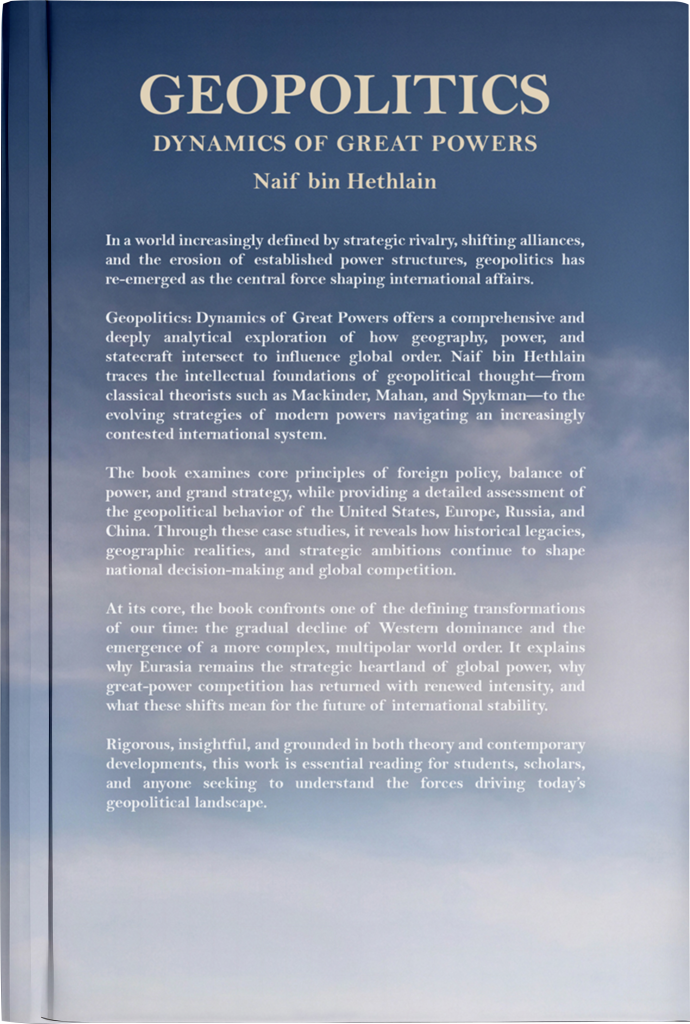
Geopolitics

DYNAMICS OF GREAT POWERS

Dirty Academia” is a nonfiction book describing different aspects of the malfunctioning of universities, beginning with the medieval period when universities were formed and continuing through modern times. With Orwellian sarcasm, humor, and metaphors mixed with Solzhenitsyn-style detailing of the harsh reality of academic life, all intermingled with the author’s personal stories, he presents a thrilling story of “the academic dirt.

Author

Naif bin Hethlain

Marek K. Dobke is a plastic surgeon, researcher, and writer whose life has spanned continents, ideologies, and operating theatres. Born in communist Poland and educated at the Medical Academy of Gdańsk — one of Europe’s oldest medical schools — he immigrated to the United States in 1981.

A Professor of Plastic Surgery at UC San Diego and a faculty member at the University of Medicine and Dentistry of New Jersey, now retired from both, he has led programs that shaped the field over five decades. With 120+ peer-reviewed articles and books, he specializes in facial rejuvenation, reconstructive breast surgery, and stem-cell-based procedures. He continues to work as an independent private practitioner.

His writing channels the same precision as his surgery and none of the same politeness. Non-fiction that names what historical institutions do when they believe no one is watching.

Naif bin Hethlain

Geopolitics

DYNAMICS OF GREAT POWERS

“Dirty Academia” is a nonfiction book describing different aspects of the malfunctioning of universities, beginning with the medieval period when universities were formed and continuing through modern times. With Orwellian sarcasm, humor, and metaphors mixed with Solzhenitsyn-style detailing of the harsh reality of academic life, all intermingled with the author’s personal stories, he presents a thrilling story of “the academic dirt.” The author, who witnessed corruption, favoritism, discrimination, ugly careerism, incompetence, fraud and its cover-up, sycophancy and arrogance, censorship, and suppression of scientific progress to please politicians or carried out by politicians, describes examples of “the academic dirt” spanning the medieval centuries, the Industrial Revolution, through the modern era of digital information and artificial intelligence. The involvement of academicians in criminal and pseudoscientific projects in medicine during the Second World War and the impact of totalitarianism are also addressed.

Book

Explore

Paper Back

Hard Cover

Blogs

Blogs & Press

Reviews

What Our Clients Say

I didn’t expect to get emotionally attached this quickly. Maggie’s journey felt so real, especially her struggles with her husband. The time travel element was fascinating, but it was the relationships that kept me hooked.

Emily

I didn’t expect to get emotionally attached this quickly. Maggie’s journey felt so real, especially her struggles with her husband. The time travel element was fascinating, but it was the relationships that kept me hooked.

Emily

I didn’t expect to get emotionally attached this quickly. Maggie’s journey felt so real, especially her struggles with her husband. The time travel element was fascinating, but it was the relationships that kept me hooked.

Emily

Get In Touch

Lorem Ipsum is simply dummy text of the printing and typesetting industry. Lorem Ipsum has been the industry’s standard dummy text ever since the 1500s, when an unknown printer took a galley of type and scrambled it to make a type specimen book. It has survived not only five centuries, but also the leap into electronic typesetting, remaining essentially unchanged. It was popularised in the 1960s with the release of Letraset sheets containing Lorem Ipsum passages, and more recently with desktop publishing software like Aldus PageMaker including versions of Lorem Ipsum.

Naif bin Hethlain

Sign Up

Lorem Ipsum is simply dummy text of the printing and typesetting industry. Lorem Ipsum has been the industry’s standard dummy text ever since the 1500s, when an unknown printer took a galley of type and scrambled it to make a type specimen book. It has survived not only five centuries, but also the leap into electronic typesetting, remaining essentially unchanged. It was popularised in the 1960s with the release of Letraset sheets containing Lorem Ipsum passages, and more recently with desktop publishing software like Aldus PageMaker including versions of Lorem Ipsum.